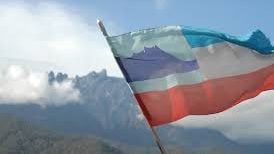
The recently concluded Sabah state election has driven home the point that Sabahans want to be rulers of their own state.
Decades of disappointment and exploitation have awakened and inspired voters to rely more on their own political power and resources.
For some time now, the Malaysia Agreement 1963 (MA63) has been widely discussed and debated by both the government and the Opposition.
This renewed focus has sparked an awakening among the people, who feel that despite Sabah’s abundant resources, they have been exploited and received little in return from the federal government.
The refusal of previous Federal Governments to grant what rightfully belongs to Sabahans and Sarawakians has only deepened frustration.
This has fuelled a rise in state nationalism, culminating in West Malaysian political parties being shown the exit.
The DAP, long attempting to extend its influence into Sabah’s turbulent political waters, met an unceremonious end. This new sentiment among voters is likely to persist and may even influence the upcoming General Election in about two years’ time.
A similar sentiment prevails in Sarawak. Under Sarawak Premier Tan Sri Abang Johari Tun Openg, the state has begun distancing itself from federal control while charting its own course for the benefit of Sarawakians.
For decades, East Malaysians allowed Peninsula politicians and businessmen to exploit their valuable resources while receiving little in return. This is evident in the persistent poverty across both states, which have yet to experience the level of development and prosperity seen in the West Coast states of Peninsular Malaysia.
Economic exploitation continued for decades, often with the complicity of both local leaders and Peninsula elites, while Sabahans and Sarawakians watched helplessly.
For example, when the Bakun Dam was completed, the Federal Government’s original intention was to export electricity to West Malaysia via undersea cables.
State leaders seemed to overlook the potential of using the abundant hydroelectric power to stimulate development—heavy industries, SMEs, and commerce—for the benefit of Sarawak’s own people.
This is a clear illustration of the long-standing exploitation.
Similarly, timber, petroleum, and gas resources, as well as vast tracts of land cleared for oil palm plantations, were controlled by Peninsula firms.
It was former Prime Minister Datuk Seri Najib Razak who partially shifted this relationship when he allocated significant investments for infrastructure development in the two states.
His declaration of Malaysia Day as a national public holiday was a symbolic gesture that no previous leader had made to foster unity between West and East Malaysians.
Today, the political climate favours East Malaysian states, as the Unity Government is heavily dependent on the support of Sabah and Sarawak parties.
This strong bargaining position has led the federal government to finally concede Sabah’s constitutional right to 40% of federal revenue.
Prime Minister Datuk Seri Anwar Ibrahim has magnanimously chosen not to appeal the High Court ruling, opting instead for negotiated settlement.
Sabah has endured many crises since joining Malaysia: the Double Six Tragedy in 1976, the rise and subsequent collapse of Parti Bersatu Sabah (PBS) due to defections engineered by Barisan Nasional, the issuance of large numbers of identity cards to non-locals to dilute the demographic strength of native Christians, the extensive exploitation of timber and other resources by tycoons aligned with the federal government, land grabs involving native customary land, and a string of corruption scandals that continue to this day.
Indeed, many winners in the recent state elections have been implicated in the current mining scandal.
Now that Sabahans have voted to free themselves from external control, it is hoped that a new era will take shape—one led by uncorrupted and competent leaders capable of uplifting the long-suffering and long-neglected people of Sabah.
The election victory of Gabungan Rakyat Sabah (GRS) and Parti Warisan should pave the way for unity and a more productive relationship with the federal government—one that, unlike before, truly benefits the people of Sabah.
(V. Thomas has been regularly contributing to Malaysian newspapers for the last 40 years.)
ADVERTISEMENT
ADVERTISEMENT