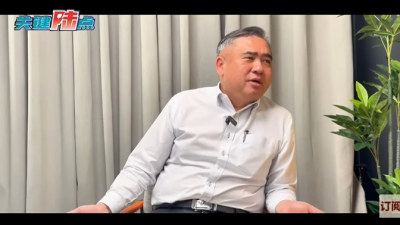
Prime Minister Datuk Seri Anwar Ibrahim said he was worried about the current trend of “glorifying and praising bribe-givers,” adding that such a trend benefits neither the state nor the nation.
He then repeated once again how hard the government has been working to combat corruption — the same old tune we need not state anymore.
Anwar did not specify which bribe-giver was being “glorified,” but everyone knows he was referring to Albert Tei.
However, Anwar has oversimplified the whole matter — or perhaps he is trying to divert attention.
First, the public did not glorify or praise Tei. In the beginning, criticism far outweighed praise. But later, more and more people began to sympathise him.
This sympathy arose because although Tei was part of a corrupt structure, there were still aspects of his actions that were commendable. He exposed collective corruption involving the Sabah state government leadership and also reported the Prime Minister’s senior political secretary, Datuk Seri Shamsul Iskandar Mohd Akin, for allegedly soliciting bribes.
Tei himself is facing legal consequences and must answer for his actions.
Call it revenge or an attempt to recover bribe money if you like — but the fact remains: he dragged hidden corruption out into the sunlight. Since Anwar constantly talks about fighting corruption, he should thank — or at least appreciate — someone who exposed graft and even submitted evidence, saving the anti-corruption authorities a great deal of work.
Moreover, within a corrupt structure, who bears the greater guilt — the bribe-giver or the bribe-taker?
Clearly, the bribe-taker. The bribe-giver pays in order to obtain convenience and benefits, but the bribe-taker barters away public power, betrays public trust, and sells off public resources. The guilt is far greater, and the punishment should be too.
Second, Tei received public sympathy precisely because the government’s response and handling of the case were unreasonable and unjust.
The mining scandal Tei exposed implicated 16 Sabah government leaders. In the end, only two state assemblymen — Datuk Dr Yusof @ Josree Yacob and Datuk Andi Muhammad Suryady Bandy— were charged, together with Tei. The other 14 walked away scot-free, including several ruling party leaders appearing in the video, despite their conversations clearly linking them to bribery.
What is even more outrageous is that in the subsequent Sabah state election, as many as 10 of them returned to contest— endorsed by various parties, including Gabungan Rakyat Sabah (GRS) and Pakatan Harapan (PH).
This is simply indefensible. If they were not charged due to insufficient evidence, the public would remain unhappy but would have no choice but to accept it. But to pull them out of the sewer and sell them to voters again — is that not filthy enough already?
In a commercial setting, if products are expired or spoilt, they should be taken off the shelves immediately to prevent consumers from mistakenly buying them and to protect the brand’s reputation. That is business ethics.
Yet in our political arena, rotten politicians are put back on display, packaged and beautified to deceive voters. Can such politicians and political parties still be trusted?
Among the 10 candidates, eight were elected — mostly in interior and rural areas. This is largely because rural voters lack access to information and rely on aid and basic facilities. The ruling parties exploited this advantage to successfully sell low-quality politicians to the voters.
However, urban and middle-class voters saw what was happening and could no longer accept it. They collectively rejected both major coalitions in their constituencies.
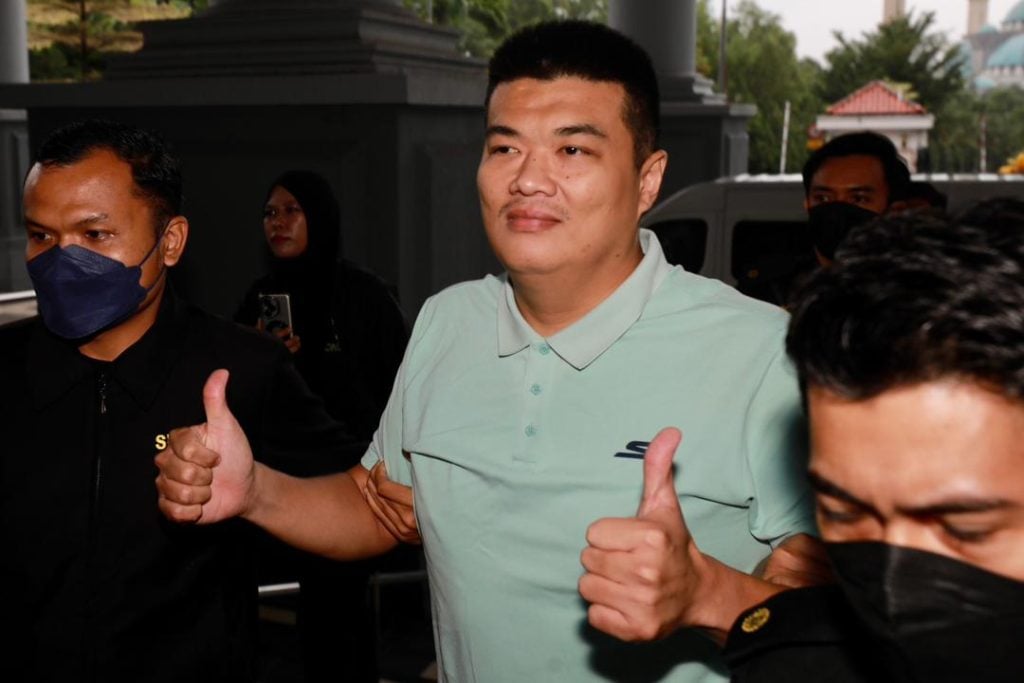
Later revelations that the senior political secretary Shamdul Iskandar was involved in bribery — coupled with the Malaysian Anti-Corruption Commission’s unusually heavy-handed and high-profile arrest of Tei — further strengthened urban voters’ determination to punish PH.
The problem is not that the people are “glorifying and praising” a bribe-giver. The problem is that those suspected of corruption were not held accountable and were instead rewarded with re-nomination. That is what angers the public.
People are not glorifying Tei; they simply think that compared with the politicians, he is much cleaner. Yet corrupt politicians are rewarded, while Tei pays a disproportionately heavy price.
Tei is merely a low-level player in the corruption structure.
The truly despicable ones are the mid-level corrupt politicians and officials — and worse still, the top-level decay: a shimmering façade hiding rot within.
As for the man at the top of this system, Prime Minister Anwar — does he truly not understand, or is he just pretending not to?
ADVERTISEMENT
ADVERTISEMENT




-400x225.jpg)