There have been a number of songs on the theme “All I want for Christmas …”. The one that has stuck in my memory is a child singing “All I want for Christmas is my two front teeth…”.
A simple but vital request.
As I reflect on International Day of Persons with Disabilities, celebrated on 3rd December 2025, I ask myself: “What does the disability community, their care partners and civil society want from the government and society?”
Remember that International Day of Persons with Disabilities is less about celebration and more about demanding urgent, tangible, long overdue action and accountability from the authorities.
These actions and changes are consolidated under the principle of moving from tokenistic gestures (a charity model) to the full realisation of rights (a rights-based model), in line with the UN Convention on the Rights of Persons with Disabilities (CRPD), which Malaysia ratified in 2010.
The basic, key essentials (simple but vital requests) we are hoping for include:
Legal reform and enforcement
We need to amend Article 8(2) of the Federal Constitution to explicitly include ‘disability’, thereby providing legal protection for persons with disabilities (PwDs) against discrimination.
We need to urgently amend and pass the Persons with Disabilities Act 2008 with full alignment with the CRPD. This must include strong, enforceable penalty clauses against individuals, businesses, and government bodies that violate the rights of PwDs.
The government needs to sign and ratify the Optional Protocol to the CRPD, which would allow individuals to submit complaints of human rights violations directly to the UN Committee on the Rights of Persons with Disabilities, holding the government internationally accountable.
Inclusive education and desegregation
We must stop the current trend of funding and building more segregated (special-needs-only) or integrated education facilities (as seen in the past few budgets) and move to true inclusion in mainstream settings, in line with the CRPD.
We need to mandate and fund comprehensive training for all teachers (not just special education teachers) in Universal Design for Learning (UDL), curriculum modification and individualised support.
These changes will benefit all children, not just those who are disabled.
Employment and economic empowerment
We need a revamping of recruitment, training, placement and support systems, in the public and private sectors, to ensure PwDs are not discriminated against in hiring or promotion.
More than three decades of failure by the government, to achieve a tiny 1% PwD employment quota in the public sector, must end.
We need to invest significantly in disability-inclusive training and building sustainable employment support programmes to support inclusion and retention of PwDs in both public and private sector jobs.
The current job coach training programmes require a serious revamp to make them functional.
Accessibility (Physical, Digital, and Transport)
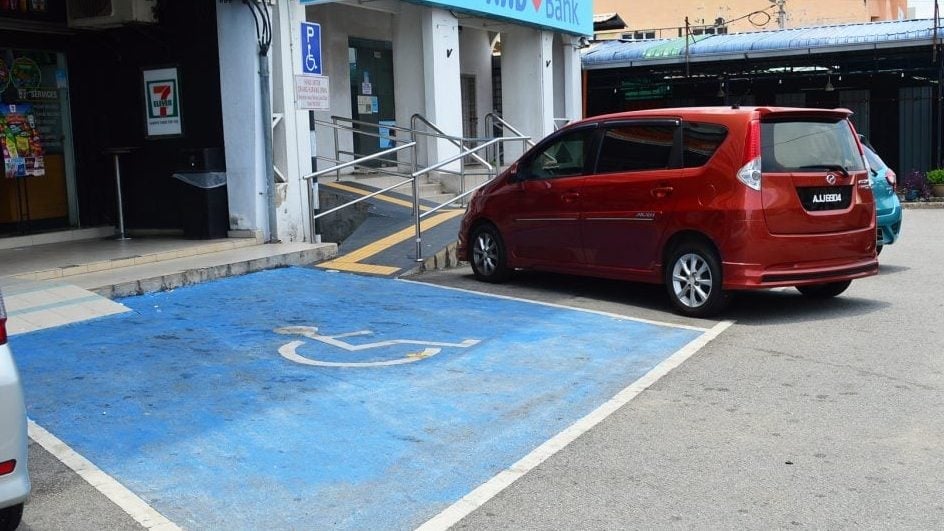
We need legally mandated access for PwD to all buildings and transport facilities.
All the structural obstacles in the built environment that restrict mobility and access must be systematically removed.
All new buildings must be accessible by design and not as an afterthought. Disabled-friendly restrooms are critical.
These improvements will benefit all of society, especially the elderly.
It is critical that the government be the one advocating for and driving this instead of relying solely on PwDs and civil society.
It is also embarrassing that no single government website is fully accessible to PwDs and has not met Web Content Accessibility Guidelines (WCAG 2.1).
It is critical that all government websites, apps, and services are built using Universal Design principles and meet international WCAG standards to prevent digital and information exclusion.
We call on the government to stop treating disability as a welfare or charity issue and start treating it as a human rights, legislative, and enforcement priority. All members of parliament (MPs) should advocate alongside PwDs in their constituency and ensure these basic needs and rights are advocated for and realised in parliament.
With at least 40% of the population PwDs or their care partners, and with an aging society, it is time that the government work concertedly to meet the basic needs of PwDs, and not as an afterthought.
(Dato’ Dr Amar-Singh HSS is Consultant Pediatrician and Child-Disability Activist.)
ADVERTISEMENT
ADVERTISEMENT